Young People Learn Sustainability and Cultural Exchange in Paraguay
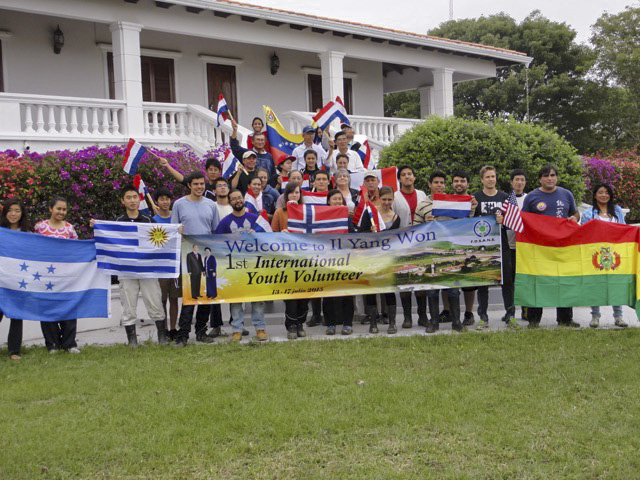
Thirty-six young volunteers representing 11 nations came together in Paraguay from July 6 to 21 for the first Universal Peace Federation (UPF) “Pathways to a Sustainable Future” project. The ambitious project was designed in the hope of building greater cooperation between North and South America—a goal that True Father extensively invested in for several decades. Following the inspiration of ‘thinking globally while acting locally,’ the project highlighted sustainable development as a major, contemporary global challenge. Then participants were able to locally address this challenge and live at the Leda Settlement, which True Parents designated as the Original Holy Ground in Paraguay. In particular, with Leda as their home-base, they could offer three days of work service in the indigenous village of Esperanza.
“I went to Leda in Paraguay for the first time about 10 years ago,” said participant Stephen Bien. “Like many others, I was attracted by the adventure and experience of being in another country, but I fell in love with the joy of service. When I had the opportunity to attend another service project in Leda, I knew that I had to go back.”
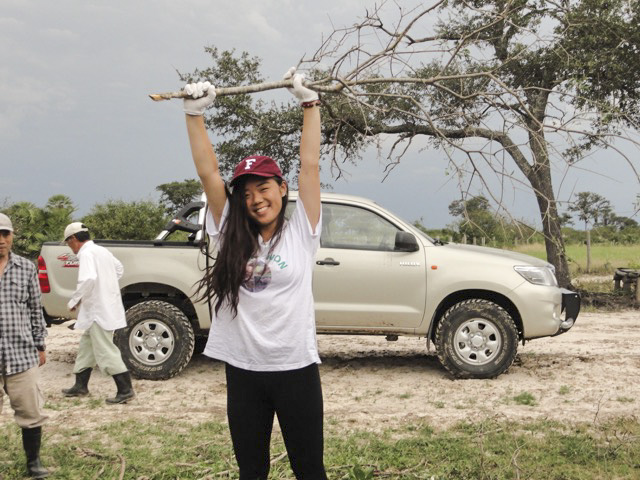
The project was co-sponsored by the Association for Sustainable Development in North and South America, which helped introduce the pioneering efforts that Japanese Unification Church elders have made since 1999 in making Leda what it is today. At that time, True Father challenged them to transform the underdeveloped Chaco Region— an area that to many seemed hellish—into a heaven on earth.
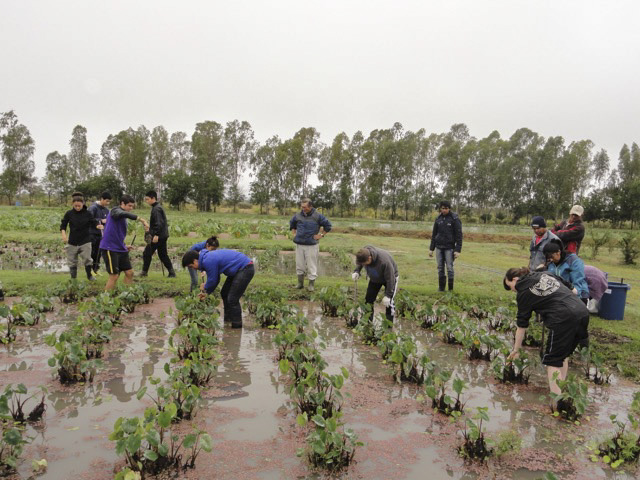
“Despite the overwhelming difficulty, [early volunteers] have transformed the land which was believed to be uninhabitable into a paradise and have created solutions to their problems instead of caving in to negativity,” said Stephen Bien. “As I continue my life of faith beyond the project, I do not want to just be simply inspired by their work but create my own solutions for the obstacles in my way.”
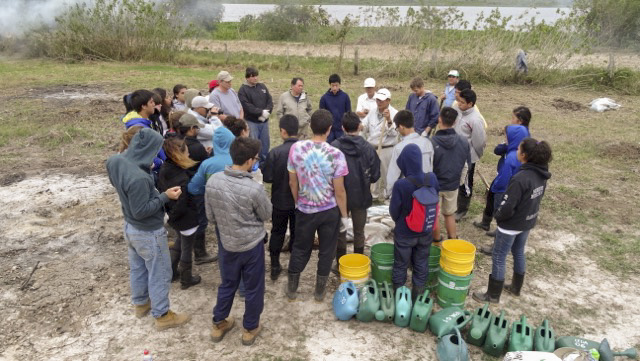
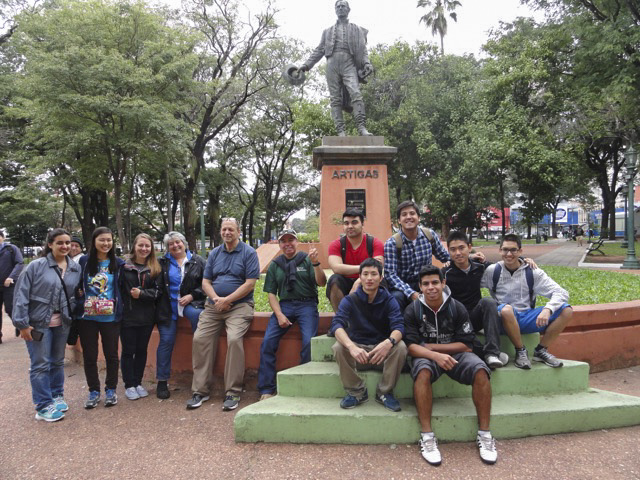
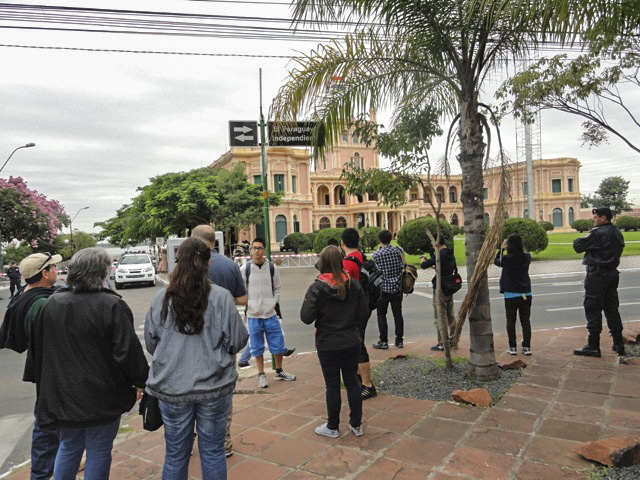
Once the diverse group had gathered, John Gehring and Carol Pobanz led an orientation program for both staff and participants to clarify the purpose, vision and expectations of the project. In addition, Mr. Evaristo Fernandez, director of the Universal Peace Federation in Paraguay, offered a clear, concise presentation about the history, culture and dreams of Paraguay and its people. The group then enjoyed a tour of part of the city that was in the midst of preparation for the historic visit of Pope Francis.
Participants then had the pleasure of visiting Loma Plata, a Mennonite community that had moved from Canada and pioneered the wilderness in order to live their faith. Loma Plata is a model of a successful religious settlement, both economically and culturally. The volunteers were struck by the deep faith and perseverance of the people. The visit also helped participants understand the vision and value of the Leda Settlement.
In the relatively few years that the Leda Settlement has existed, hardworking Unificationists have turned the muddy waters of the Paraguay River into excellent drinking water and utilized practical, sustainable advances in agriculture, tree planting and aquaculture. It was a lesson for participants in how world hunger and poverty could be plausibly addressed and eliminated in the future. It has been an important force in sustainable development for the local region as well as a witness to the vision of True Father. As local news ABC Color commented in its coverage, “Recently the Leda Group released 50,000 pacu fish into the river. This is very good for a sustainable future. They do not preach at people but want people to discover God through nature. Everything was founded by Reverend Moon’s vision to build a community in harmony.”
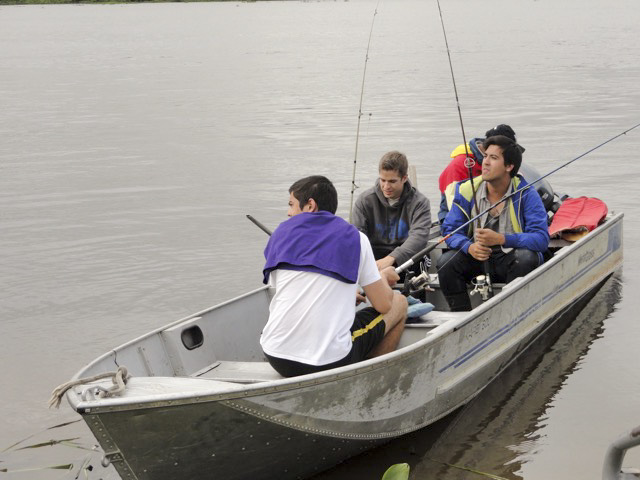
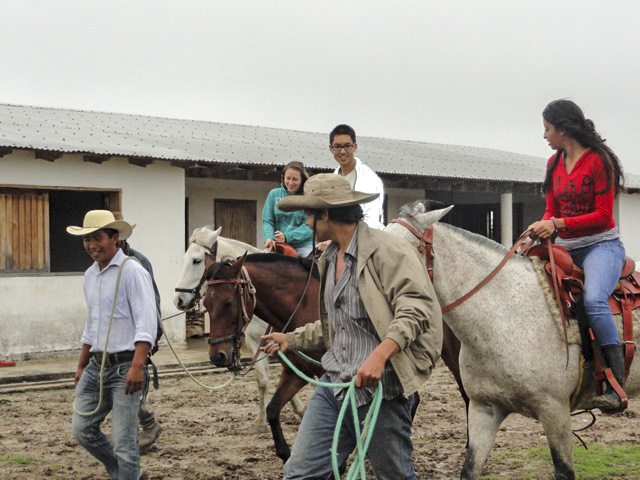
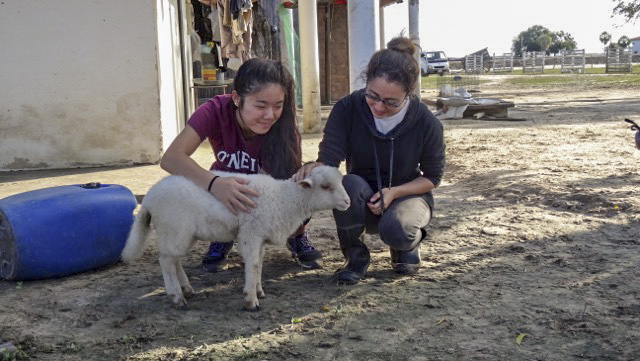
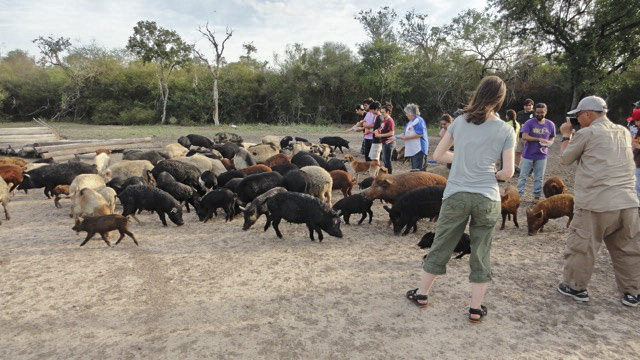
The young volunteers were given the unique chance to experience the project firsthand. They spent time fishing and learned about raising free-range pigs. Some worked with horses, while others repaired things on the farm.
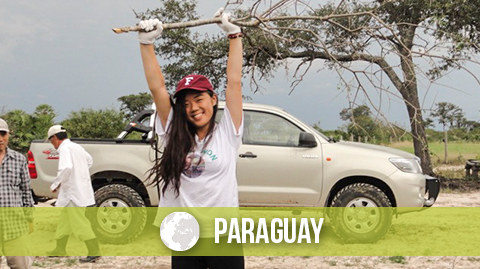
In Esperanza, participants experienced living in a village that had no running water and no regular electric power. River baths, outhouses and walks on muddy roads frequented by snakes were a part of the village routine. “These experiences enabled us to grasp that this is the way of daily life, not only in Esperanza but for so many millions of people on our shared planet,” said one staff member.
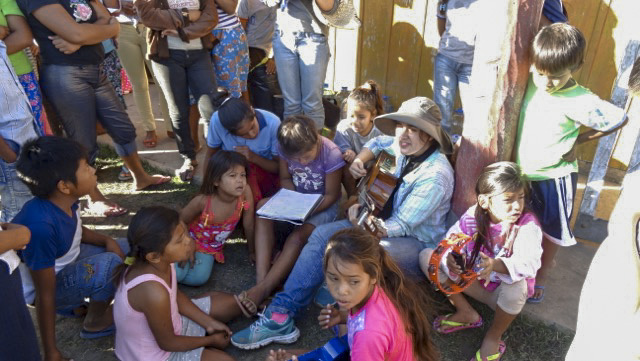
“The time in Esperanza was a very touching experience,” said participant Kana Inaba. “The children were very open and friendly, showing the greatest amount of love. They talked to each participant as if they were already a part of the village. Regardless of the color of the skin or the language barrier, they spent time with us. They were not attached to materialistic things, but really lived the moment that was in front of them. From them, I learned not to always be occupied by my surroundings, but to appreciate the simple things in life, such as human interaction.”
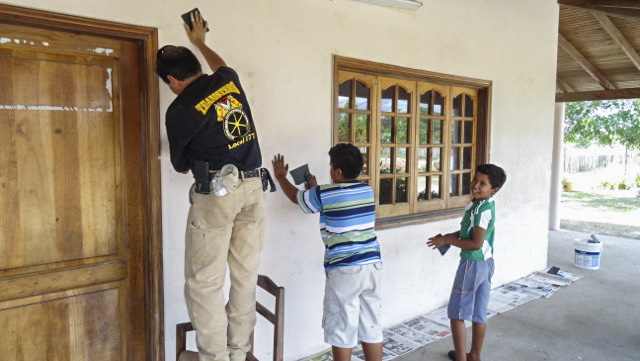
One of the most memorable experiences for the participants was the children of Esperanza, who ran to welcome them as they walked off their boats and into the village. “It took just a short time before we were gathered in the schoolyard singing and even dancing together.” The team then spent three days painting schools, planting neem trees, and offering 20 needed school desks to the community. Grace Kim, a recent high school graduate, said that while they had worked hard in the village, it was the experiences with the children that moved her most. She noted, “I felt God in a deeper way than I ever experienced before—through those children and how they unconditionally accepted me. God’s love became so real to me.”
Local Unificationists in Paraguay were anxious to welcome the project, and planned an International Day of Culture and Friendship. It was a chance for the participants to get to know the local congregation and to meet, worship and celebrate together.
Among all the projects and events, the volunteers were even able to lend a hand to the Women’s Federation for World Peace in Asuncion, which works with TESPAPE A, an NGO that serves the elderly. They joined a special event that honored the citizens with a morning of song, dance and fellowship. Senator Emilia Alfaro de Franco—the nation’s former first lady and an active supporter of TESPAPE A—joined the event, offering both words of encouragement and a warm personal touch.
The experience was transformative for the community and participants alike. Organizers are already looking forward to next July, when they will return to Paraguay for the second “Pathways to a Sustainable Future” project.